Other Mommy Review: A Familiar Monster, an Adaptation That Missed the Point
A great horror novel became a rushed, incoherent adaptation. After seeing Coraline, I understood why Other Mommy's changes bothered me even more.
This review discusses major plot points. If you haven't seen it yet, the verdict at the bottom is safe.
I generally enjoy going to the movies. I love the art of filmmaking, the experience of sitting in a theater, and the opportunity to escape into someone else’s imagination for a couple of hours. I try to go into every screening with an open mind and as few expectations as possible. That’s probably why ReelMatrix will tend to have overwhelmingly positive reviews. I genuinely want to enjoy what I’m watching.
But every once in a while, a movie comes along that makes that difficult.
I saw Other Mommy on Thursday, October 8, the night before its theatrical release, and walked away thoroughly disappointed. I found it incoherent, derivative, and surprisingly shallow for a story with such compelling source material.
Which is particularly frustrating because I absolutely loved the book.
A genuinely terrifying novel
Josh Malerman’s Incidents Around the House was one of those rare novels I couldn’t put down. I read the entire thing in a single day. It was creepy as hell, genuinely unsettling, and compelling enough that I wanted to see what happened next even when I dreaded finding out.
Naturally, I was excited to see it adapted.
Now, I don’t expect a movie to reproduce its source material word for word. Different mediums require different approaches, and sometimes combining characters, condensing events, or restructuring a story makes perfect sense.
What I do expect is for an adaptation to preserve the spirit and ferocity of what made the original story worthwhile.
Other Mommy simply didn’t do that.
The film rushes through material that deserves considerably more attention, introduces developments that feel poorly justified, and ultimately sacrifices much of the psychological horror that made the novel so effective.
And while that would be disappointing enough for someone familiar with the book, my bigger problem is that the movie doesn’t particularly work on its own terms either.
Then I finally watched Coraline
Here’s where things get interesting.
On Halloween night, I sat down with my wife and oldest daughter, who had just accompanied me to see Wildwood, to watch Coraline for the very first time.
Yes, somehow I’d managed to go all these years without seeing it.
And I was almost immediately struck by just how much of Other Mommy I was watching all over again.
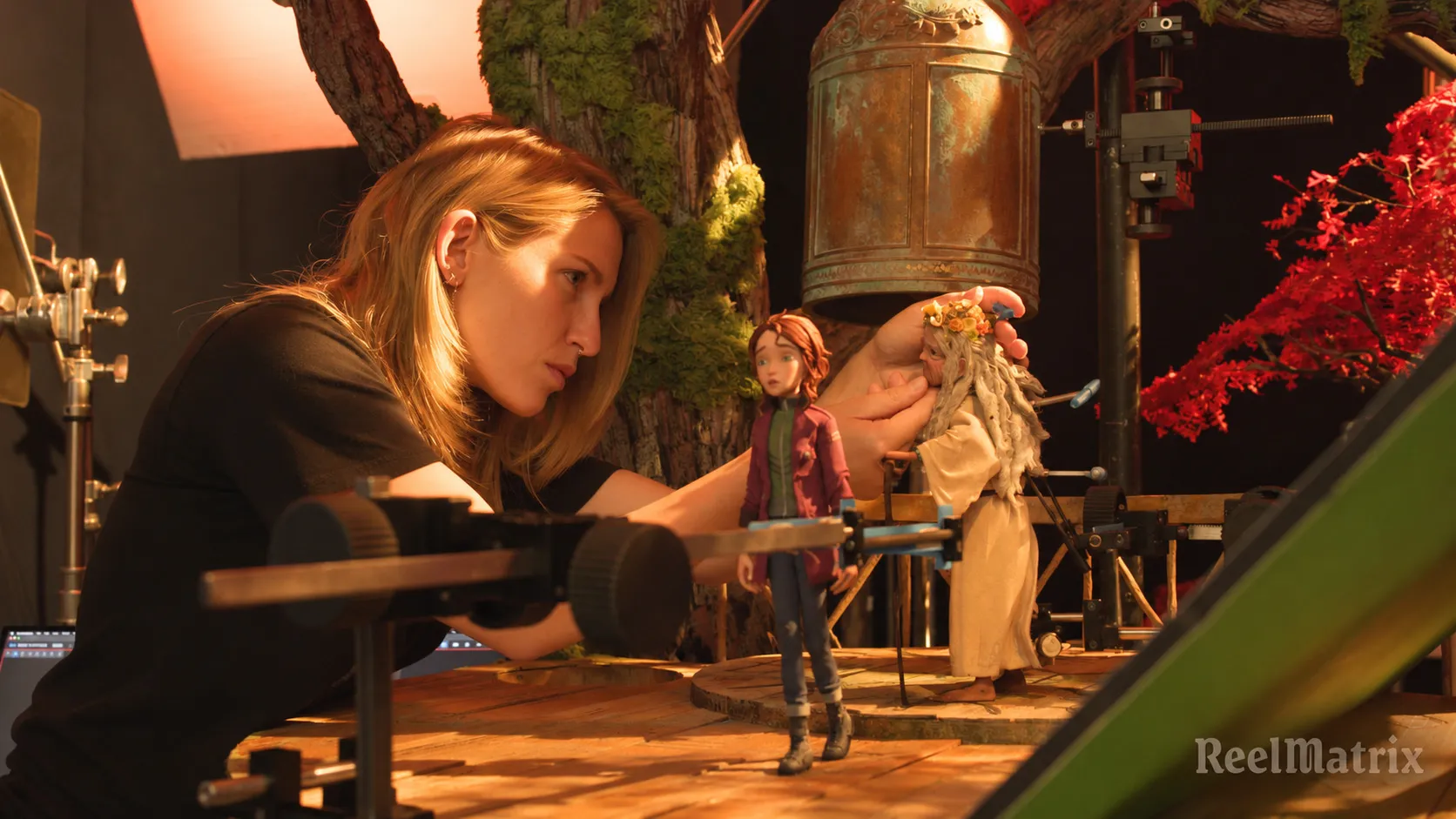
Consider the premise of Neil Gaiman’s Coraline, originally published in 2002 and adapted into the wonderful 2009 stop-motion film. A young girl feels neglected and misunderstood by her imperfect parents. She encounters an alternate maternal figure who seemingly offers everything her real mother doesn’t: affection, attention, understanding, and a more exciting existence.
But there’s a catch. To remain with this supposedly better mother, Coraline must surrender her eyes and have buttons sewn in their place.
Now consider Incidents Around the House. A young girl struggles to understand the emotional dysfunction of the adults around her. A mysterious entity presents itself as Other Mommy, offers the possibility of something better, and repeatedly asks permission to enter her heart.
Different mechanics, same underlying terror.
In both stories, a child is being manipulated into surrendering their autonomy to something presenting itself as a source of maternal love. Both creatures exploit the emotional distance between children and their parents, and both disguise a horrifying act of possession or consumption as something the child should willingly accept.
And then there’s the imagery.
As Coraline progressed, I watched the Other Mother transform into a grotesque, spindly, almost spiderlike creature. It was astonishingly close to how I had pictured Other Mommy while reading Malerman’s novel.
The similarities were difficult to ignore.
Does that mean Malerman copied Coraline? No. And it would be irresponsible to make that accusation without evidence.
In fact, Malerman has explained that the original inspiration came from his brother’s child saying goodnight to someone called Other Mommy. That incident stayed with him for years before becoming the novel.
But independent inspiration doesn’t erase the similarities between the finished stories.
Both are fundamentally exploring the same frightening idea: what happens when a child, unable to understand the imperfections of parental love, is offered an apparently better alternative by something that wants to consume them?
And that’s where the comparison becomes especially damaging to the film.
Derivative on top of derivative
Here’s the distinction I think matters most.
Even if Incidents Around the House explores territory familiar to readers of Coraline, Malerman managed to make that territory feel terrifying again.
His novel is told through Bela’s perspective. We experience the world through a child’s incomplete understanding of adult relationships and supernatural danger. We aren’t given the reassuring distance of an all-knowing narrator who can explain exactly what is happening.
And Other Mommy herself is something far stranger than an evil duplicate of Bela’s mother.
In an interview with SciFiNow, Malerman explained that the creature is not fundamentally a woman or even a recognizable human being. He also clarified that while the entity imitates Bela’s mother at one point in the novel, its identity isn’t defined by that imitation.
That distinction is enormous.
Malerman’s Other Mommy is frightening because she is almost impossible to categorize. Even her name is a child’s attempt to make sense of something she doesn’t understand. The uncertainty becomes part of the horror.
The movie abandons much of that ambiguity.
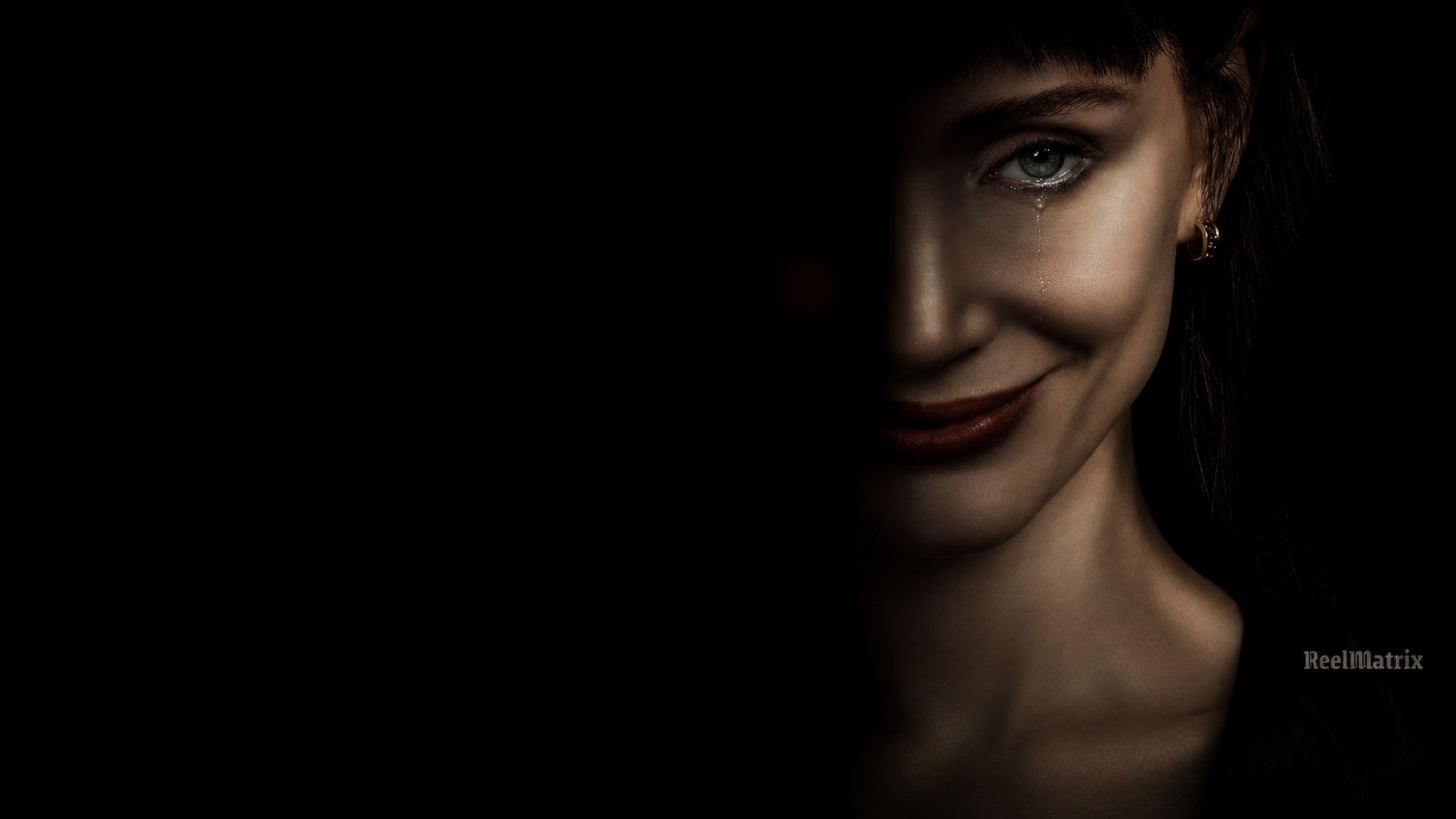
Instead, Jessica Chastain portrays both Bela’s mother, Ursula, and the entity that impersonates her. Director Rob Savage has openly discussed using those dual performances to make the audience question which version of the mother they’re watching.
I understand the filmmaking intention. And Chastain is certainly capable of delivering the performance.
But I think it’s a terrible trade.
By turning the entity into a literal maternal doppelganger, the adaptation takes one of the book’s most disturbing mysteries and reduces it to a much more recognizable horror device.
And having now seen Coraline, I find that decision even more baffling.
The source material already shares considerable conceptual similarities with a famous story about an Other Mother who manipulates a child through the promise of superior maternal love. Why would an adaptation move even closer to that story’s visual and narrative identity?
The novel took familiar horror and made it feel alien.
The film took that alien horror and made it familiar again.
To me, that’s derivative on top of derivative, and it strips away precisely what made the book worth adapting.
Good performances, incoherent writing
For all my criticism, I want to give the actors their due.
Jessica Chastain, Jay Duplass, and young Arabella Olivia Clark deliver good performances. I believed the emotional connections between the characters, and I never felt that the cast was the problem.
Unfortunately, convincing performances can only do so much when the underlying story doesn’t make sense.
At just 93 minutes, Other Mommy races through its material. And while the novel certainly has enough content to justify some significant trimming, the problem isn’t simply that things were removed.
It’s that the remaining pieces don’t fit together particularly well.
The affair, the fractured family dynamic, the bizarre teleportation elements, and the increasingly erratic supernatural rules all feel like ideas the film introduces without properly developing.
The movie wants the affair and the parents’ emotional failures to matter, but rarely gives those failures enough room to develop into something meaningful. It wants the supernatural threat to feel inescapable, but its shifting mechanics often seem designed around whatever the next scare requires.
And it wants us to understand Bela’s vulnerability without adequately exploring the emotional logic that makes her relationship with Other Mommy so disturbing.
I don’t particularly care that the adaptation combines characters or rearranges encounters from the novel. Those are perfectly reasonable filmmaking decisions.
I care that the movie seems to mistake moving quickly for telling a coherent story.
A succession of frightening images is not the same thing as sustained psychological horror.
And that’s especially frustrating when the source material has already demonstrated how effectively those themes can work.
The horror of imperfect parents
I think this is where both Coraline and Incidents Around the House have something genuinely meaningful to say.
Children don’t always understand their parents.
They experience the frustration, exhaustion, absence, disagreements, and imperfections of adult life without fully understanding what causes them.
A parent who seems distant may be overwhelmed. A parent who seems angry may be frightened. A parent who disappoints their child may still love them more than anything in the world.
Of course, that doesn’t excuse every parental failure, but it creates a painful gap between how children experience their families and how those families actually function.
Both stories place something monstrous inside that gap.
The supernatural maternal figure doesn’t need to convince the child that their parents are evil. It only needs to convince them that there’s something better.
And therein lies the tragedy.
The child is being asked to make an irreversible decision about love, trust, and identity without possessing the emotional maturity to understand the consequences.
Coraline explores this through an alluring alternate reality that gradually reveals itself as a prison. Malerman explores it through an increasingly relentless entity seeking permission to inhabit a child’s body and existence.
The underlying ideas are remarkably similar, but their approaches are different enough to create distinct experiences.
Other Mommy, however, seems far more interested in turning that premise into a series of increasingly elaborate supernatural confrontations.
The family dysfunction becomes convenient exposition. The monster becomes a recognizable antagonist. The emotional manipulation becomes another mechanism for generating jump scares.
And then comes the ending, which for me confirms just how badly the film misunderstood the power of its source material.
A commercially successful disappointment
There’s an irony here that I find particularly interesting given what we’re building with ReelMatrix.
From a business perspective, Other Mommy looks like a smart investment.
Universal and Blumhouse-Atomic Monster adapted an established horror novel, recruited a recognizable actress, and produced the film for a reported $19 million.
The marketing was clever, too. Its trailer played before Christopher Nolan’s The Odyssey, generating considerable attention and frightening audiences who weren’t necessarily expecting a horror advertisement.
I remember seeing that marketing myself. It helped get me into the theater.
The film opened to approximately $27.8 million domestically and has since grossed more than $100 million worldwide. Those are impressive theatrical returns relative to the reported production budget, although box-office gross isn’t the same as studio profit.
So commercially, there’s certainly something worth celebrating.
But that doesn’t make the movie good.
And it certainly doesn’t mean the adaptation succeeded artistically.
It’s an important distinction for a website that tracks the financial performance of movies. Box-office success tells us something about demand, marketing, distribution, and audience interest. It does not tell us whether a film successfully explored its own ideas.
If anything, Other Mommy demonstrates how effectively familiar intellectual property, recognizable talent, and smart marketing can sell a movie whose creative execution I found deeply disappointing.
Good for the filmmakers if the project makes money.
I just wish they’d made a better movie.
Final thoughts
I wasn’t expecting to dislike Other Mommy this much. I loved the book, wanted the adaptation to succeed, and walked into the theater ready to enjoy myself.
Instead, I watched a film that seemed to misunderstand the qualities that made its source material so compelling.
And discovering Coraline a few weeks later only strengthened that impression.
The similarities between the two stories are too substantial to ignore, but the real problem isn’t that Malerman explored a familiar idea. It’s that the film adaptation discarded much of what made his treatment of that idea distinctive.
The result is a movie that feels rushed, narratively incoherent, and far less disturbing than the material it adapts.
I still enjoyed the night out. I enjoyed discussing the film afterward, thinking critically about its shortcomings, and eventually discovering another movie that helped me better understand why this one didn’t work.
But enjoying the experience of going to the movies isn’t the same thing as enjoying the movie itself.
4.5/10. Good performances and some effective horror imagery cannot rescue an adaptation that trades psychological depth for spectacle and ultimately loses the meaning of its own story.
Spoilers: The ending that betrays the novel
If there is one change that encapsulates everything wrong with this adaptation, it’s the ending.
In Incidents Around the House, the story concludes with a devastating victory for Other Mommy.
Bela’s parents are killed, leaving her frightened, isolated, and vulnerable. Eventually, she agrees to let the entity into her heart, and the nightmare reaches its horrifying conclusion.
The creature takes possession of her, leaving Bela’s consciousness trapped in the darkness while something else assumes her identity.
It is a merciless ending, but it works because the entire novel has been building toward that possibility.
The entity spends the story attempting to secure permission. It manipulates Bela’s understanding of love, safety, and belonging. The adults around her struggle desperately to protect her, but their efforts ultimately fail.
The consequences are permanent.
Now compare that with the movie.
Instead of following through on that tragedy, Bela refuses the entity one last time and apparently defeats it. Her parents survive, and the film settles into a comparatively reassuring resolution.
Yes, there’s a final suggestion that Other Mommy may still be lurking. But a last-minute horror tease doesn’t restore the emotional consequences the adaptation has removed.
And that’s what I find so cheap about it.
The book’s ending was horrifying because it refused to provide an easy escape from everything that came before. The movie replaces that inevitability with a more conventional confrontation in which the child simply holds out against the monster.
The irony is that Coraline also ends with its young protagonist overcoming the Other Mother, but that resolution is earned through a story specifically constructed around her growing understanding of love, independence, and the difference between genuine care and manipulation.
Malerman’s novel is constructed around something else: the relentless pursuit of a child’s consent and the catastrophic consequences of obtaining it.
Those aren’t interchangeable endings.
You can give both stories different conclusions because they are doing different things with similar ideas.
But when you adapt Malerman’s story, borrow the visual familiarity of Coraline, and then also give your protagonist a comparatively conventional victory, what exactly have you preserved?
Certainly not the thing that kept me reading the original novel for an entire day.
To me, that’s the greatest failure of Other Mommy.
It didn’t need to reproduce every scene in the book.
It needed to understand why those scenes existed.
Research and fact-checking sources
- Josh Malerman on the origins of Incidents Around the House and the creature’s identity — SciFiNow
- Josh Malerman’s 2024 interview about the novel’s inspiration — The Nerd Daily
- Director Rob Savage on Jessica Chastain’s dual performance — SciFiNow
- Other Mommy box-office performance and budget — The Numbers
- The Other Mommy trailer that terrified The Odyssey audiences — Good Morning America
The verdict
4.5/10
Good performances can't rescue a rushed, incoherent adaptation that sacrifices the unsettling psychology and consequences of its source material.