Ghost Soldier Review: A B-Movie With B+ Execution
Ghost Soldier recycles practically every action-movie cliché in the book, but Jim Caviezel, inventive weapons, and a brisk 90 minutes make it surprisingly enjoyable.
Advertisement
This review discusses major plot points. If you haven't seen it yet, the verdict at the bottom is safe.
I wasn’t supposed to see Ghost Soldier.
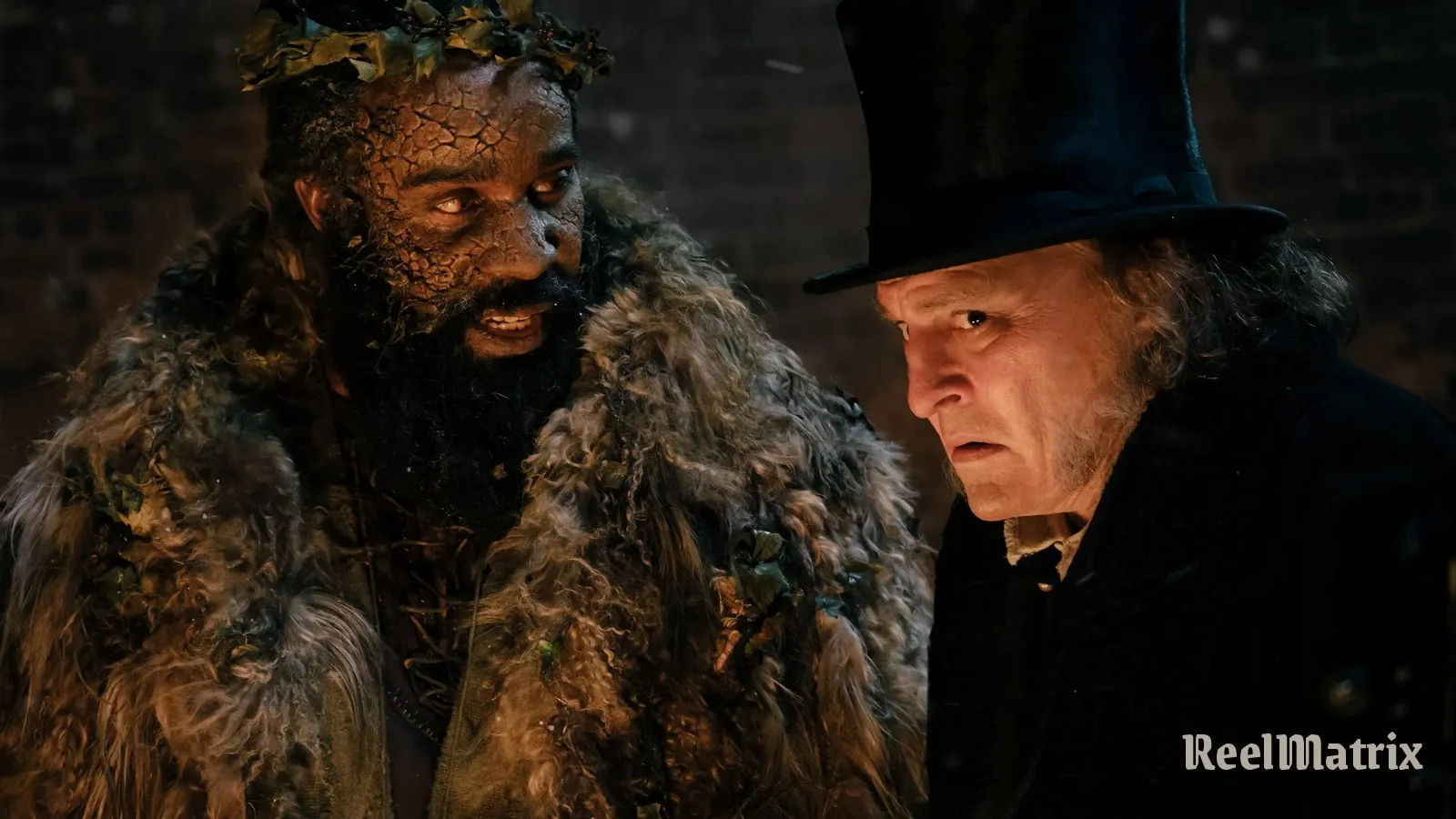
In fact, by the time I finally sat down in the theater, it was my third choice of the afternoon. My daughter needed to go to the doctor, which meant the 4:05 showing of Ebenezer I’d originally planned to catch was out. No big deal. I adjusted and figured I’d see How to Rob a Bank at 4:20 instead. Then a major accident turned traffic into a mess, that plan fell apart too, and I made one final pivot to Ghost Soldier at 4:55.
At that point, I was beginning to think fate really wanted me to see this movie.
I also have a little ritual whenever I go to the theater. I like to walk around and look at all the posters before my screening, despite the fact that I come to the movies every week and have generally seen every single one of them already. There’s just something about being there, seeing what’s coming, and enjoying the experience before the lights go down. I didn’t want to miss that part of my afternoon.
But this time I was getting nervous about being late. Sure, advertised showtimes generally come with a generous stretch of trailers, but I was convinced I knew exactly how Ghost Soldier would begin. I could already picture it: an opening action sequence in some war zone establishing what a legendary soldier our protagonist is, followed by an hour of plot setup, and then the big third-act showdown. I was worried that if I missed those opening minutes, I’d miss one of the only two major action sequences in the entire movie.
Well, the joke was on me.
There was no spectacular opening mission to establish our hero. Instead, the movie more or less introduces a high-ranking government figure who tells us how smart, dangerous, and remarkably capable this man is. Apparently we’re supposed to take his word for it.
And that pretty much sets the tone for the writing in Ghost Soldier.
Here’s the strange part, though: I actually had a good time.
I’m giving this movie a 5/10, and I mean that score. The plot is painfully familiar. Almost every character is a caricature. Relationships are established with a line of dialogue instead of actual development, and the story contains almost nothing I haven’t seen a hundred times before. If I were grading it purely on writing, I don’t know how much I’d have to praise.
But somehow, taken as a whole, the damn thing works well enough to be entertaining.
That’s what makes this such an interesting five.
A story you’ve seen a hundred times, with one modern upgrade
Jim Caviezel plays Henry “Fitz” Fitzgerald, a quiet man living in a small town who happens to have a very particular set of skills and a past that makes him extremely inconvenient to the wrong people.
Enter an enormous corporation that wants to take over the land around the community for a massive development. Some residents don’t want to sell, so the people in charge resort to intimidation, corruption, and hired muscle. Naturally, they discover that pushing around the locals is much harder when one of those locals is a highly trained former soldier with access to some very sophisticated hardware.
Sound familiar?
Of course it does. You could have made practically this exact movie thirty years ago. Back then, the bad guys might have wanted to tear down someone’s home to build a highway or a shopping mall. Today, apparently, the fashionable evil development is an AI data center.
And to be clear, I didn’t really come away thinking this was an anti-AI movie. The data center is simply the modern vessel for a very old story about powerful interests trampling ordinary people in pursuit of money. You could swap the project out for almost anything else and the plot would function exactly the same way.
What makes it funny is just how little subtlety the villains are afforded.
We have the corrupt local officials, the righteous law-enforcement officer who objects to what’s happening, the cold corporate executives, their equally sinister overseas partners, and an assortment of cocky, needlessly cruel mercenaries who practically exist to get what’s coming to them. Nobody is operating in shades of gray. You’re told who the good people are, who the bad people are, and exactly how much you’re supposed to dislike each one.
There’s a scene at a corporate party that perfectly captures the movie’s ridiculousness. One of the executives gives a speech about Brownstone’s ambitions, and says something along the lines of the company’s goal having always been to monetize water.
And the crowd cheers.
I actually laughed out loud.
Not because I thought the filmmakers were deliberately setting up a great joke. If anything, it felt like they had written that moment completely straight. But something about a room full of people enthusiastically applauding the notion of monetizing water was so absurd that I couldn’t help myself.
The important thing is that I wasn’t laughing in frustration. It was funny in an enjoyable, almost charmingly ridiculous way. The movie’s sincerity makes the absurdity easier to accept, even when it gets this outrageous.
B-movie writing, B+ execution
At one point during the screening, I remember thinking that this felt like a B-movie. All the familiar archetypes were there, the dialogue was often clumsy, and the plot was basically a straight line from “bad guys show up” to “bad guys get what they deserve.”
But it didn’t entirely feel like a B-movie, either.
There was something more competent and polished happening on the screen. The action looked good, the special effects were effective, and the film had enough confidence in what it was doing that I never felt like I was watching people halfheartedly go through the motions.
A B-movie with B+ execution, maybe. That’s about the best way I can describe it.
Caviezel is a big part of that. He makes Fitz convincing as a tough, capable, serious man, even when the script does little more than tell us how impressive he’s supposed to be. He doesn’t spend the entire movie winking at the camera or making a joke out of the material. He treats the situation with conviction, which is exactly what this kind of story needs.
And while I wouldn’t call the dialogue consistently good, Fitz gets a handful of quips and little speeches that genuinely work. There are brief moments where you can see a more interesting character trying to emerge from the familiar lone-warrior template.
Most importantly, the action is fun.
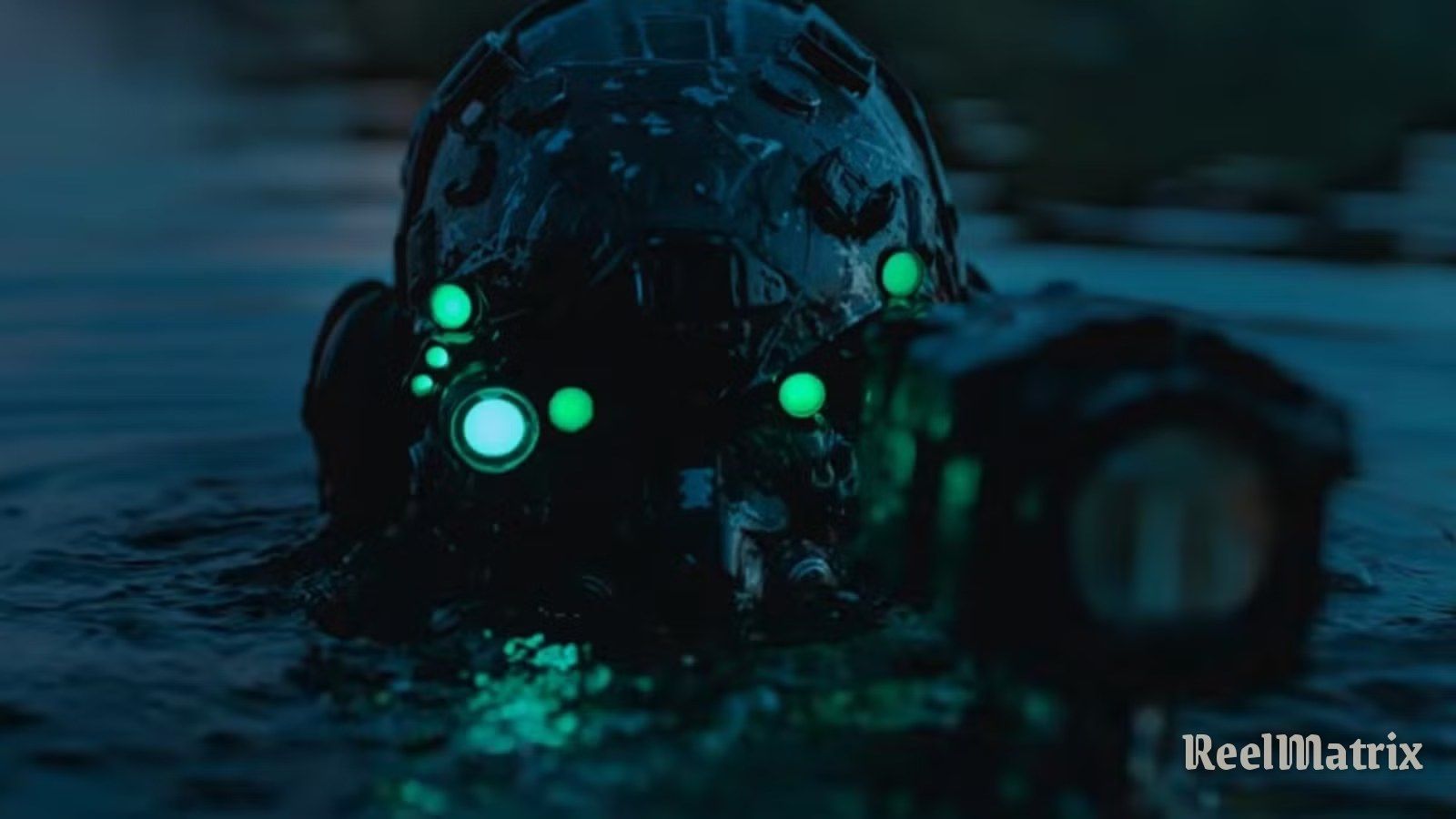
The weapons and gadgets are among the movie’s better ideas. Fitz has access to some unusual tools, and watching him put them to use is often more entertaining than the actual circumstances that lead to him using them. There are clever little traps and methods that give the confrontations some personality, and the effects sell the spectacle without making it feel cheap.
These are the moments when Ghost Soldier earns the audience’s attention rather than simply demanding it.
The trouble is that I wish the filmmakers had leaned further into the very idea suggested by the title.
For a Ghost Soldier, he’s surprisingly easy to find
One of the more appealing possibilities in a movie like this is an almost mythic fighter who never seems to be where the enemy expects him. Imagine the mercenaries searching an area, slowly realizing one of their men has disappeared, then discovering too late that they’ve walked into another trap. Imagine the growing paranoia of facing someone they know is nearby but can never actually locate.
The movie plays with that idea in a few clever moments, and those are some of its most satisfying sequences.
But much of the action ultimately becomes more conventional running and gunning. Fitz is a better shot than everybody else, has better equipment than everybody else, and generally wins because he’s the most capable man in the room.
That’s entertaining enough. It just isn’t particularly imaginative.
By the time the final confrontation arrives, the main villain is watching him on surveillance cameras and repeatedly calling out his location to the other bad guys. There goes the entire appeal of being an elusive, almost supernatural presence. He’s less of a ghost than a very talented soldier everyone happens to be able to track.
It didn’t ruin the climax for me, and I don’t want to pretend I was sitting there miserable while the bullets flew. I enjoyed watching Fitz clean house. The action was well presented, and the weapons remained fun to see in use.
But I kept thinking how much more satisfying it might have been if his enemies were fighting something they could barely see. Not because he needed to be invincible, but because the mystery of his movements could have been part of the threat.
That would have given the movie an identity beyond being yet another story about one very tough man defeating a lot of somewhat less tough men.
Characters who barely have time to become people
If the action is where the production rises above its writing, the supporting characters are where that writing becomes hardest to ignore.
Everyone is introduced as a recognizable type. We’re meant to accept relationships, loyalties, and long histories because someone mentions them in a sentence. Characters are said to respect one another, know one another, or have some important connection, but we’re rarely allowed to spend enough time with them to understand why.
The one relationship that gets anything resembling real development is Fitz’s bond with the young boy, Jack. They actually spend time together. They have conversations. We get to observe something develop between two people instead of being informed that a bond already exists.
I don’t want to oversell it. Their relationship isn’t some extraordinary emotional achievement that suddenly gives the movie tremendous depth. It’s simply the one place where the film bothers to do the basic work of letting two characters connect.
That alone makes it stand out.
I would have liked considerably more of that with Heidi, the local law-enforcement officer who opposes the corruption. There’s an opportunity for a compelling partnership there: someone trying to uphold the law from within a broken system working alongside a man who is increasingly willing to handle matters himself.
Instead, it feels as though she says they have to do something, Fitz makes one of his tough-guy remarks, and suddenly they’re attacking the corporate operation together. All right, I guess we’re a team now.
Again, I don’t need an elaborate subplot or an extra twenty minutes explaining how they put their plan together. But there has to be a middle ground between laborious exposition and having characters act as though they’ve already shared scenes we never got to see.
A relationship doesn’t become convincing just because the screenplay tells us it exists.
And yet, there’s a funny trade-off here that I can’t ignore.
Ninety minutes. Thank you.
I’ve become increasingly convinced that most movies ought to fall somewhere around an hour and a half to an hour and fifty minutes. Obviously there are stories that earn more time, but once a movie starts pushing well beyond that, I often find myself mentally identifying half an hour of scenes that could have been removed.
Ghost Soldier runs about 90 minutes, and I appreciated every bit of that discipline.
It’s brisk. It doesn’t linger endlessly on subplots that aren’t interesting enough to justify themselves. It doesn’t keep stopping to remind us that corporations are corrupt or that innocent people are being mistreated. It establishes the situation, lets the bad guys be bad, and gets on with the business of having Fitz do something about it.
You could certainly argue that the short runtime contributes to the thinness of its characters. I think that’s fair.
But I also don’t believe the answer would have been to tack another half hour onto the movie. Would I really have wanted twenty more minutes of these particular characters talking through the details of their plans? Probably not.
What I wanted was better use of the time already there.
Give Heidi and Fitz one meaningful interaction that changes how they see each other. Let us watch Fitz establish his reputation instead of having a government official list his qualifications. Use the action itself to reveal character. Let one scene accomplish two or three things instead of using separate scenes to announce information we already understand.
There’s a difference between trimming a story down and failing to develop it in the first place. Ghost Soldier does some of both.
Still, I’ll take its energetic ninety minutes over two hours of the same material stretched thin simply because someone decided an action movie needed to feel bigger.
The kind of movie I’d happily stumble across on a Tuesday night
Here’s where I land on Ghost Soldier.
I don’t think it’s a particularly good movie. The plot is almost entirely recycled. The villains are broad enough to be cartoon characters. Most of the supporting cast gets very little to work with. And while the action delivers, it never fully capitalizes on the possibilities of a hero whose enemies should be terrified because they can’t find him.
But I also didn’t regret seeing it for a second.
Caviezel sells the character. The gadgets are cool. The effects are good. The bad guys are so absurdly evil that watching them lose is enjoyable on a basic, uncomplicated level. Some of Fitz’s dialogue lands surprisingly well, and the movie knows when to get to the point and, just as importantly, when to end.
If I’d come across this on Netflix or Prime Video on some random Tuesday night after a long day of work, it would have been exactly the kind of thing I was in the mood for. Ninety minutes to unwind, watch a capable tough guy outsmart and outshoot a collection of cartoonishly corrupt villains, and not worry too much about whether the screenplay is breaking new ground.
There’s room for movies like that.
What makes this particular experience funny is that fate apparently worked pretty hard to steer me into a screening I wasn’t planning to attend. First Ebenezer, then How to Rob a Bank, then the traffic accident, and finally Ghost Soldier.
Was it some extraordinary cinematic discovery I never would have made otherwise? Not even close.
But I had fun. And sometimes that’s enough to make an otherwise mediocre film worth the afternoon.
5/10. A B-movie with some B+ execution, a lot of familiar nonsense, and just enough personality to make the whole thing go down surprisingly easy.
Spoilers: The movie I kept imagining underneath this one
The most revealing thing about Ghost Soldier isn’t necessarily any single plot twist. It’s the gap between the character the movie promises and the action movie it eventually becomes.
Fitz’s reputation is established largely through other people talking about him. He’s a legendary operator, a brilliant weapons developer, someone the wrong people should never have provoked. That’s a perfectly fine setup, but it creates an expectation that his methods will feel as extraordinary as his résumé.
And occasionally they do. Some of his gadgets and traps make him feel like a genuine problem the mercenaries can’t solve through brute force. Those scenes hint at a more inventive thriller in which the bad guys grow increasingly afraid of what they don’t know.
Then the finale settles into a much more ordinary exchange of gunfire, with the villain using camera feeds to broadcast Fitz’s position. The film is still satisfying at the level of simple action spectacle, but it abandons some of what might have made the fight distinctive.
There’s also a missed opportunity in Fitz’s partnership with Heidi. The film tells us clearly enough that she’s on the right side of the conflict, and I never doubted why the two would ultimately work together. What I missed was the gradual development of that trust. The story jumps from recognizing a shared problem to fighting side by side so quickly that their alliance feels more functional than personal.
Compare that with Fitz and Jack. I didn’t find their bond exceptionally moving, but at least it has space to breathe. That small amount of time makes a difference. It provides the only real suggestion that these people might continue to matter to one another after the gunfire stops.
And then there’s Brownstone’s corporate celebration, with the executive extolling the goal of monetizing water to an approving crowd. I don’t know whether that line was intended to be satirical, but I found the moment hilarious. It’s such a cartoonishly direct expression of corporate greed that it almost becomes self-parody, yet the movie presents it with a completely straight face.
None of this turns Ghost Soldier into a secretly brilliant film. That’s not the argument I’m making. It remains a thin, highly predictable action story built out of pieces we’ve seen countless times.
But its few genuinely clever ideas, its conviction, and its refusal to overstay its welcome explain why I walked out more entertained than that description probably makes it sound.
Sometimes a movie’s shortcomings are obvious, and so is the fun you had watching it. Both things can be true.
The verdict
5/10
A completely predictable, thinly written action movie that somehow remains an enjoyable 90-minute ride. Perfect for an undemanding night on the couch.
Advertisement