Godzilla Minus Zero Review: Bigger Monsters, Smaller Stakes
Breathtaking kaiju spectacle can't save Godzilla Minus Zero from recycled arcs, exhausting exposition, and emotional beats that don't know when to stop.
Advertisement
This review discusses major plot points. If you haven't seen it yet, the verdict at the bottom is safe.
I walked out of Godzilla Minus Zero in something close to disbelief, and judging by the atmosphere in my theater, I wasn’t the only one.
There was no sense of awe when the credits rolled. No excited chatter about the incredible monster battles we’d just witnessed. The room felt strangely deflated. A woman sitting in front of me actually turned to her two friends and said, “I’m sorry I brought you guys to this.”
I’m not kidding.
Now, I can’t speak for everyone who sees this movie, and I certainly don’t expect every audience to share my reaction. But that moment captured my experience pretty well. I went in excited, spent much of the runtime wondering when the story was finally going to get moving, and left genuinely surprised by how disappointed I felt.
What’s particularly ironic is that I had watched Godzilla Minus One again on Tuesday specifically to prepare for the sequel. Even after multiple viewings, that movie holds up beautifully. I’d probably give it a 9/10. It’s gripping, grounded, heartfelt, and surprisingly intimate for a film about a giant radioactive monster destroying Japan.
Two nights later, I watched the follow-up and found myself asking a question I never expected to ask after Minus One:
Can we please get back to Godzilla?
What Minus One understood
The brilliance of Godzilla Minus One wasn’t simply that it had fantastic special effects. It was that the destruction meant something because of the people experiencing it.
Koichi Shikishima was a man burdened by guilt, ashamed of his perceived cowardice, and terrified of assuming responsibility for the life unfolding around him. His struggle to accept love, build a family, and find some measure of redemption gave the entire film a powerful emotional center.
The supporting characters felt like people rather than plot devices. Their relationships developed naturally, the pacing moved smoothly from one conflict to the next, and even the quieter stretches felt essential because they were building toward something. It played almost like a survival thriller in which Godzilla wasn’t just a spectacular threat; he was an existential test of everything the characters were desperately trying to preserve.
And that’s the distinction that made the original so special. I didn’t need Godzilla in every scene, because I cared about what happened when he wasn’t there.
Minus Zero still has tremendous visual ambition, but somewhere along the way it seems to have forgotten how important that human foundation was.
Returning characters, recycled struggles
I don’t think bringing back the original characters was necessarily a mistake. The problem is that the movie doesn’t seem to have found much new for them to do.
Koichi and Noriko are still struggling to find stability as a family. Koichi is still hesitant to put himself in danger and take to the skies. The scientist is still being challenged over plans that treat human lives as expendable in the effort to defeat the monsters.
These are all worthwhile conflicts. They were also central to the previous movie, where they were explored with considerably more focus and emotional purpose.
Here, too many of the returning characters feel as though they’re reliving versions of the same arcs, while additional subplots crowd around them and make the whole thing increasingly difficult to connect with.
I’m not saying that trauma disappears once someone overcomes a particular obstacle. Real people can struggle with the same fears for years. But a character’s continued struggle still needs to reveal something new. A sequel has to do more than remind us of the feelings we experienced last time.
I honestly wonder whether this story might have benefited from introducing more new characters and allowing some of the original cast to remain where we’d left them. Minus One earned its emotional resolution. Minus Zero often feels like it’s trying to manufacture another one by revisiting the same material.
As a result, the people who once made me fear for their lives started to feel strangely hollow. Not because the actors were suddenly incapable, but because the writing kept asking me to care about situations that no longer felt fresh or fully developed.
Trust the audience to understand the point
This might be my biggest issue with the film: it simply does not know when to stop making its point.
There’s a tremendous amount of exposition about the devastation these creatures cause, the immorality of inflicting further suffering, the consequences of human intervention, and the connection between Godzilla, Ghidorah, and humanity’s own history of nuclear destruction.
And I want to be very clear about something: I agree with the themes.
Godzilla has always been connected to the horrors of nuclear weapons and the consequences of humanity’s destructive capabilities. Those ideas belong in this franchise. I don’t need these movies to abandon their moral complexity and become nothing but monsters punching each other.
But there’s a difference between exploring a theme and repeatedly explaining that theme to an audience that understood it the first time.
Minus Zero returns again and again to similar arguments, similar imagery, repeated flashbacks, and lengthy conversations about questions the movie has already raised. We’re reminded of the destruction, then reminded of how tragic the destruction is, then reminded that responding to the destruction may also be morally troubling.
I understood. I agreed. And eventually, I just wanted the story to move forward.
The original film understood that a single devastating image, a well-developed relationship, or a difficult decision could communicate more than several minutes of dialogue. This one seems determined to spell out every emotional and philosophical implication, sometimes more than once.
And ironically, that insistence weakens the very message it’s trying so hard to communicate.
Trust your audience. Let the imagery speak. Let the characters make difficult choices. Let a moment mean something without stopping to explain exactly what we should feel about it.
When emotion becomes exhausting
There is one scene near the end that, to me, perfectly illustrates the problem.
The central family faces a painful goodbye involving their daughter. As a parent, I was immediately invested. Watching a frightened child struggle with the possibility of losing her parents is heartbreaking, and for the first couple of minutes the scene absolutely worked on me.
Then it kept going.
And going.
It felt like a seven-minute farewell, with the little girl screaming and crying almost the entire time. At first I felt the emotion the filmmakers clearly intended. A few minutes later, I was rolling my eyes and practically begging the parents to either take her with them or leave already.
That’s a terrible place for a movie to put its audience, and I don’t mean that the subject matter was too upsetting. The opposite, actually. It was initially upsetting because it worked. The scene simply kept pushing long after it had achieved its purpose.
More crying does not automatically create more sadness. More dialogue does not automatically create more depth. And more time spent on a moment does not automatically make that moment more meaningful.
Sometimes the most emotionally powerful thing a filmmaker can do is recognize when the audience has already felt what it needs to feel—and cut.
Minus One was exceptionally good at earning emotion. Minus Zero too often seems to confuse emotional intensity with emotional effectiveness.
The monsters are extraordinary
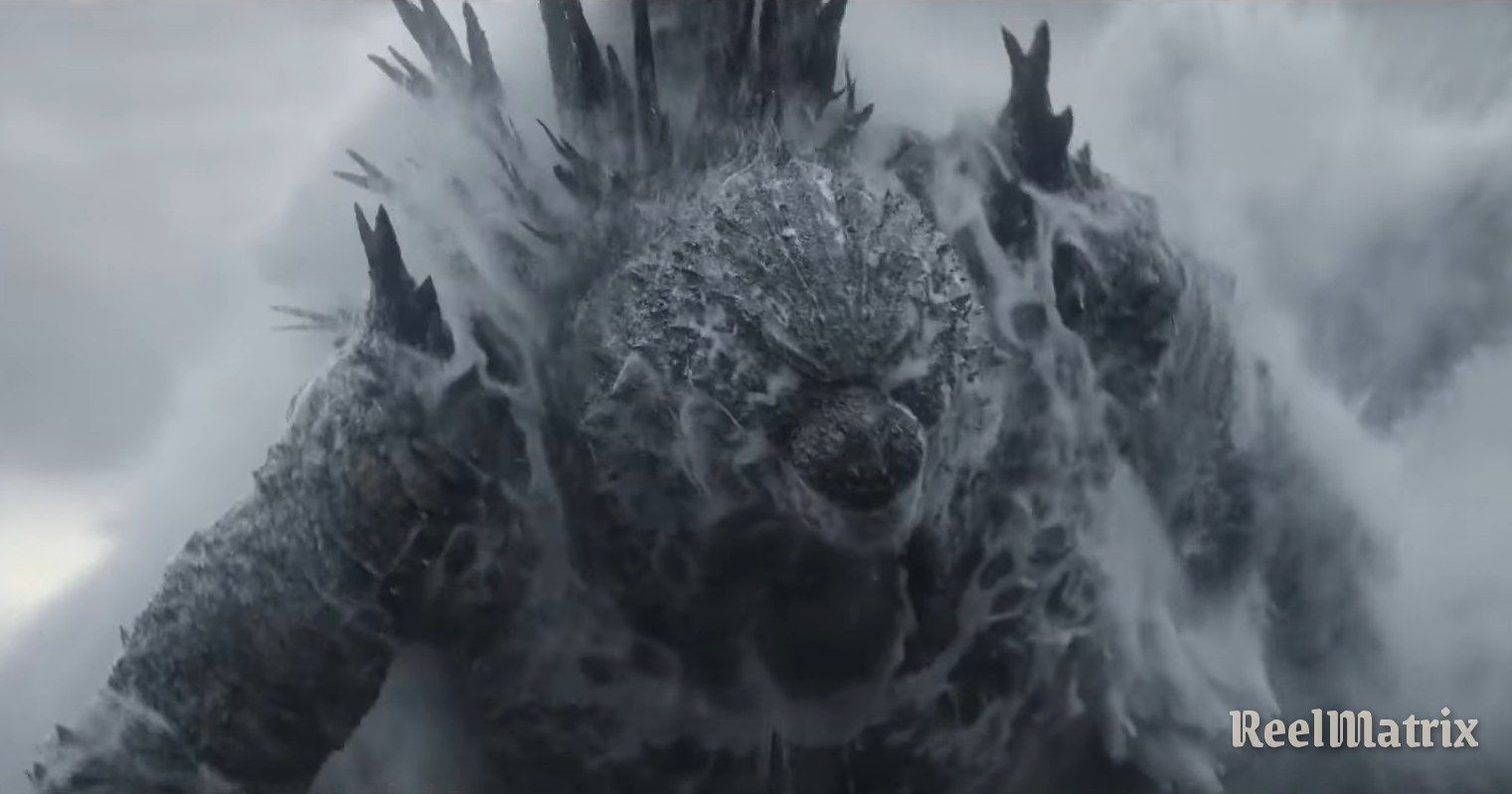
Now for the part that makes this review so frustrating to write: when Godzilla Minus Zero finally unleashes its monsters, it can be absolutely breathtaking.
The visual effects are phenomenal. The scale of the destruction, the creature animation, and the sheer physical presence of these enormous beings are genuinely impressive. These are the moments when I was completely immersed, when I remembered exactly why I’d been so excited to see the sequel in the first place.
The monster sequences are exciting and, at times, spectacular enough to justify seeing them on a big screen. There were stretches where the movie came alive in a way that the human drama simply hadn’t.
And then the monsters would disappear, and I’d find myself back in another long-winded conversation or subplot, waiting for the next burst of excitement.
That’s almost the exact opposite of my experience with Minus One.
In the original, the human story was so compelling that Godzilla’s appearances felt like terrifying interruptions to lives I desperately wanted to see continue. In this sequel, the human story so often stalled that Godzilla’s appearances felt like a welcome interruption to the movie itself.
I kept thinking that this 135-minute film might have worked much better closer to 100 minutes. Keep the heart of the story, keep its ideas about human suffering and moral responsibility, but cut the repetition, tighten the subplots, and give the monster conflict room to actually develop.
I don’t need nonstop destruction to enjoy a Godzilla movie. The first film proved that. But when the story between the destruction isn’t working, no amount of restraint can make those stretches compelling.
Bigger monsters don’t necessarily mean bigger stakes
The addition of Ghidorah should have opened up an entirely different kind of storytelling opportunity. There are now two enormous creatures whose conflict can transform the world around them.
Visually, that escalation delivers. Dramatically, I don’t think the rivalry is properly developed.
The monsters are impressive individually, but the movie doesn’t create much of a relationship between them beyond the eventual fact that they fight. There’s little sense of an escalating conflict that makes their confrontation feel inevitable or personal. It’s a huge spectacle without enough buildup to give it the dramatic weight it deserves.
This is another place where I think the sequel mistakes scale for substance.
A bigger monster is not automatically a more interesting antagonist. A bigger battle is not automatically a more satisfying climax. The story still has to make us understand why this confrontation matters, beyond the obvious danger of two colossal creatures tearing things apart.
I’ll discuss the specifics below, because they involve some of the movie’s biggest spoilers. But the short version is that I wanted an actual monster rivalry, not simply a reason to put Godzilla and Ghidorah in the same place at the same time.
Final thoughts
I genuinely wanted to love Godzilla Minus Zero. I loved Minus One, I revisited it right before the screening, and I went into the sequel excited to see where Takashi Yamazaki would take these characters and this world next.
Instead, I got a movie that often feels like it’s repeating the emotional lessons of the first film while explaining them so insistently that they begin to lose their power.
The characters are less compelling, the pacing is bloated, and the human story repeatedly stalls under the weight of its own exposition. The monster rivalry doesn’t receive the buildup it deserves, and some of the supposedly heartbreaking moments are stretched until they become exhausting.
And yet, when the creatures are finally on screen, the technical achievement is extraordinary. Those sequences are thrilling, beautifully realized, and far and away the biggest reason I’m not rating this movie lower.
Maybe that’s what disappointed me most. Minus One proved that a Godzilla movie could be both a spectacular monster film and an excellent human drama. I wasn’t asking the sequel to abandon either half of that equation.
I was hoping it would understand why the two halves worked together.
5.5/10. Breathtaking visual effects and monster action keep Godzilla Minus Zero afloat, but the rest of the film too often feels like something I had to sit through to get to the good parts. Coming from a sequel to a movie I’d still rate a 9/10, that’s a tremendous disappointment.
Spoilers: Godzilla, Ghidorah, and the rivalry that never quite happens
The climactic conflict is probably the clearest example of an opportunity the movie didn’t fully capitalize on.
I actually thought the humans were going to find a way to revive Godzilla. That could have made for an interesting moral dilemma: people deliberately bringing back one terrifying force because they’re desperate to stop another. It would have connected the human themes of responsibility and questionable intervention directly to the monster story.
Instead, Godzilla returns to life with what feels like remarkably convenient timing. The humans then lure him toward Ghidorah, and the two fight because the plot has finally arranged for them to meet.
The fight itself looks incredible. My problem isn’t the spectacle. It’s the lack of a developed rivalry leading into it.
Imagine if Godzilla and Ghidorah had clashed earlier in the story, before Ghidorah became King Ghidorah. We could have watched their conflict establish itself, seen the stakes rise as Ghidorah evolved, and then approached the final battle with a genuine sense of unfinished business.
Suddenly Godzilla’s return would have meant more than the convenient arrival of a powerful creature capable of stopping another powerful creature. It would have been the continuation of a conflict the film had spent time developing.
Instead, we get the enormous payoff without enough of the setup.
And the same problem runs through the human side of the story. Koichi’s reluctance to fight and fly, the family’s struggle to build a stable life, and the scientists’ arguments over putting people at risk all recall the first film without offering enough fresh insight. The long farewell with the daughter feels like the movie trying to force a final emotional high point after spending so much time insisting on the seriousness of its themes.
I don’t think the sequel needed more tragedy, more flashbacks, or more speeches to become meaningful. It needed to do more with what was already there.
Minus One understood that the audience would feel the danger if it first gave us people we cared about and choices we understood. Minus Zero often seems convinced it needs to keep reminding us of the danger, and reminding us how terrible it is, even after we’ve already gotten the point.
The lesson I take from it is simple: earn the stakes, trust the audience, and then let the story speak for itself.
The verdict
5.5/10
Breathtaking monster sequences are the saving grace of a sequel that repeats its predecessor's emotional beats without earning them.
Advertisement