Victorian Psycho Review: A Perfectly Deranged Balancing Act
Maika Monroe is astounding in a darkly hilarious Victorian horror film that balances madness, psychological depth, and sheer entertainment almost impossibly well.
Advertisement
This review discusses major plot points. If you haven't seen it yet, the verdict at the bottom is safe.
I almost didn’t want to write this review right away.
I walked out of Victorian Psycho so thoroughly impressed that I thought I should probably sleep on it before sitting down to put my thoughts together. Maybe a night’s distance would help me get past the excitement and look at it a little more objectively. Maybe I was just relieved to get back to the kind of movie I’ve been missing after a string of enormous blockbusters. Maybe my expectations had been so modest that I was giving it more credit than it deserved.
Well, I slept on it. And I still can’t get over how much I loved this movie.
I went to the theater hoping for a good, relatively intimate indie horror experience. Something smaller, stranger, and more personal. I was looking forward to getting back to my roots a little. A Victorian-era take on the kind of madness that made American Psycho so memorable sounded like a perfectly entertaining way to spend an evening. If it could pull that off competently, I’d have been happy.
What I got was so much more than that.
Victorian Psycho is funny, horrifying, absurd, intelligent, and completely deranged. It’s visually fascinating, wonderfully paced, and full of unpredictable turns. More impressively, it somehow maintains control of all those qualities without ever allowing one to undermine another. I was engrossed from beginning to end, and I would happily watch it again tomorrow.
And at the center of absolutely everything is Maika Monroe, delivering one of the most extraordinary performances I’ve seen in a horror movie in a long time.
Maika Monroe is absolutely astounding
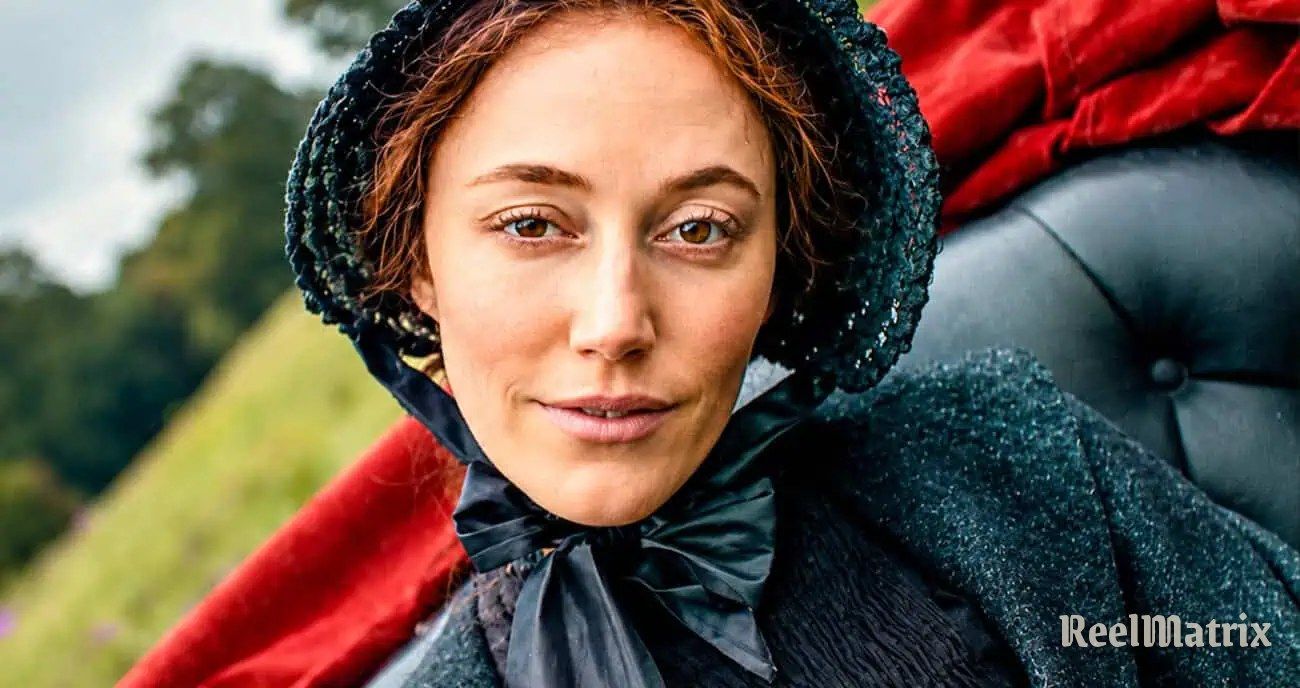
I knew Monroe could carry a horror film. What I wasn’t prepared for was just how thoroughly she would become Winifred Notty.
It’s almost difficult to explain because so much of what makes the performance remarkable isn’t found in any single line of dialogue or dramatic outburst. It’s in the way she moves. The way she holds and turns her head. Her posture, her expressions, the peculiar rhythms of her speech. The tiniest shifts in her face, sometimes seeming to communicate an entire private conversation going on behind her eyes.
Then there are the voiceovers and monologues, which are fantastic. They let us spend time inside Winifred’s mind without making that mind any less unsettling. There’s an intelligence to her observations, and sometimes a startlingly relatable honesty, even when the conclusions she reaches are completely insane.
Monroe seems so committed to every physical and psychological detail that I occasionally found myself wondering how an actor even gets into that headspace, let alone stays there for an entire movie. Someone ought to check on her after spending this much time inhabiting Winifred.
I’m joking, of course, but only a little about how convincing the performance is.
What really impressed me, though, was the partnership between Monroe and the cinematography. There are moments when the camera seems almost attached to the peculiar motions of Winifred’s head, following the way she looks and moves rather than simply observing her from a comfortable distance. The effect is subtle but incredibly powerful. Her mannerisms become part of the film’s visual language.
We’re not just watching an unusual woman move through a Victorian household. We’re being drawn into her particular way of experiencing the world.
That kind of filmmaking could have become distracting or gimmicky. Here, it made the performance even more effective. The camera and the actor seem to understand one another perfectly, and together they create a character who is nearly impossible to look away from.
The kind of comedy horror desperately needs more of
One of the things I’ve complained about in recent reviews is how often modern movies interrupt their own serious moments to make sure the audience knows they’re in on the joke.
A character faces something horrifying, someone delivers a punchline, and suddenly the tension is gone. The joke might even be funny, but the movie has stopped believing in its own world long enough to tell it.
Victorian Psycho does practically the opposite.
This movie is hilarious at times. Not in a constant stream of obvious jokes, and certainly not because its characters spend the whole film winking at the audience. Its humor is dry, surreal, and frequently so absurd that I found myself laughing at the sheer audacity of what I was watching.
But the movie never stops taking itself seriously.
Winifred isn’t standing around performing comedy for our benefit. She means what she says. She believes in her own strange reasoning. She approaches increasingly outrageous circumstances with a kind of personal conviction that makes them even funnier. The laughter comes from the enormous distance between her understanding of a situation and ours.
It’s a difficult distinction, but an important one. A movie can be ridiculous without its characters behaving as though their lives are a joke.
And that commitment extends to the horror. When the violence comes, it’s disturbing. When the psychology gets uncomfortable, the movie doesn’t suddenly retreat into a safer, more conventional tone. It lets us sit with the absurdity and discomfort while still finding genuine enjoyment in them.
That’s what I mean when I say it strikes an almost impossible balance. It can change the emotion you’re feeling in a matter of seconds without ever seeming to change what kind of movie it is.
A monster who desperately wants to belong
The most fascinating thing about Winifred is that I genuinely liked her.
Not because she deserves to be excused for what she does. She absolutely doesn’t. But because beneath the murderous impulses and bizarre behavior is something painfully recognizable: a person who wants to fit in without surrendering who she is.
And the movie is smart enough not to make that conflict simple.
Winifred seems perfectly capable of recognizing the absurdity of the wealthy society around her. She sees its artificial manners, its rigid expectations, the strange rules governing what can be said and done, and the way people are expected to behave simply because of their position in life.
But she also seems to accept those rules, at least enough to desperately try to participate in them. She wants to understand how she is supposed to behave. She wants to be included. She wants relationships that feel real. And she can be surprisingly calculated and intelligent in her attempts to appear perfectly normal.
There’s something both funny and tragic about watching someone recognize how absurd a social system is while still wanting so badly to be accepted by it.
Of course, in Winifred’s case, there’s the small complication that she is a psychopath with violent impulses she cannot or will not properly control.
What makes the writing so effective is that her violence doesn’t simply feel like a series of murders arranged to fill a slasher movie’s runtime. Much of it seems connected to moments when she feels threatened, exposed, rejected, or misunderstood. You can follow her twisted internal reasoning without ever mistaking it for moral justification.
And that distinction matters. The movie doesn’t turn her into an innocent victim of society. There’s a darker pleasure in what she does, a selfishness she can’t explain away. We’re allowed to sympathize with her loneliness without forgetting what she is capable of.
She wants people to accept her for who she is, but she can’t seem to accept that other people have the right to reject her.
That’s a wonderful, disturbing contradiction to build a character around.
Eat the rich, without the lecture
There’s an unmistakable class element to the story, and it fits the Victorian setting beautifully.
Winifred arrives in a world of wealth, privilege, etiquette, and carefully maintained appearances, where human worth often seems to depend on one’s ability to perform the proper role. The social hierarchy is so rigid and ridiculous that it practically provides its own satire.
In a lesser movie, I could imagine that material becoming an excuse for endless speeches about class injustice, or a simplistic argument that everyone with money deserves whatever happens to them.
Instead, Victorian Psycho largely lets the society reveal its own absurdity through the way people behave. It trusts us to see the hypocrisy without stopping the movie to explain it.
That’s what I appreciated so much. Underneath the madness, there’s a genuine exploration of individuality, social expression, and the pressure to become somebody acceptable to everyone else. It has ideas about what happens when those pressures collide with a deeply unstable mind.
But it never forgets that we’re also here to have an outrageous good time.
The themes enrich the entertainment rather than getting in its way. You can appreciate the psychology and social commentary, or you can simply enjoy watching this bizarre character navigate an increasingly insane series of situations. The film works beautifully either way.
A worthy companion to American Psycho
I went in hoping Victorian Psycho might be a passable historical variation on American Psycho. By the end, I was thinking about just how naturally the two could exist alongside one another.
Not because this movie copies Patrick Bateman or tries to recreate Christian Bale’s performance. It doesn’t. Winifred is entirely her own creation, and Monroe gives her a personality and physical presence that feel wonderfully distinct.
But both films understand how to make a murderer fascinating by placing that person inside a society obsessed with appearances. Both find wicked humor in social rituals that already border on the ridiculous. Both let us spend time inside the mind of someone we should find repellent and somehow make that perspective compulsively watchable.
The difference, to me, is in what their protagonists seem to want.
Bateman is so consumed by image, status, and superficiality that he becomes an almost perfect embodiment of the emptiness surrounding him. Winifred seems to notice the ridiculousness of her environment while still longing for a genuine place within it. Her desire for connection gives her madness an oddly personal quality.
Victorian Psycho could practically have marketed itself as a distant cousin of American Psycho. Yet it never feels content to imitate that film’s most recognizable tricks. It has its own rhythm, its own sense of humor, and a character who is every bit as captivating for entirely different reasons.
That’s a much greater accomplishment than a clever title or premise.
Not my usual kind of slasher—and I loved every minute
I should probably acknowledge something about my own tastes here: I’m not normally a huge fan of straightforward slashers built around a human being brutally killing other people.
I usually gravitate toward horror with something supernatural or otherwise extraordinary at its center. Purely human cruelty, especially when the movie seems to exist primarily to showcase it, doesn’t do much for me. The violence can start feeling miserable or gratuitous long before the credits roll.
That’s part of why my reaction to this movie surprised me so much.
Victorian Psycho is undeniably violent, and some of its subject matter is going to be a hard line for certain viewers. In particular, there is violence involving a child that I would completely understand someone not wanting to watch. I’ll discuss that in the spoiler section, because the handling of it is an important part of why the film worked for me.
But I never felt as though the filmmakers were simply trying to make me squirm for the sake of it. The kills fit the atmosphere and the character. The movie is capable of being grotesque without indulging in cruelty just to prove how edgy it can be.
And the pacing is fantastic. It never seemed to get stuck repeating a point I’d already understood or lingering on a scene that had done its job. The twists kept me engaged, the filmmaking kept surprising me, and the story always seemed to have somewhere interesting to go next.
A lot of horror films can pull off one or two of those things. This one seemed to get all of them right.
Final thoughts
Maybe I was especially ready for a movie like Victorian Psycho. After spending so much time watching enormous, expensive productions, I wanted to settle into something intimate, stylish, and a little strange. I wanted horror that felt like a filmmaker and a performer had something specific, personal, and utterly unhinged they couldn’t wait to show me.
But I don’t think lowered expectations can explain how much I enjoyed this.
Maika Monroe’s performance is astounding. The cinematography makes her every movement more unsettling and compelling. The humor is brilliantly dry without puncturing the horror. The violence is disturbing without feeling pointlessly sadistic. The themes about class, identity, acceptance, and individuality are genuinely interesting without ever becoming a lecture.
Most of all, the movie remembers that it’s supposed to be fun.
It’s a cheeky, surreal, wildly entertaining roller coaster ride with enough intelligence and psychological texture to give you something to think about after it’s over. I was completely absorbed throughout, and the fact that I’d happily rewatch it immediately when it arrives on streaming might be the clearest endorsement I can give.
I don’t expect everybody to love it. For some viewers, the subject matter will simply go too far. I respect that. But for me, this was one of those rare theatrical experiences where practically every creative decision seemed to land exactly where it needed to.
10/10. A perfectly deranged balancing act, a spectacular showcase for Maika Monroe, and a reminder of just how exhilarating horror can be when it trusts its audience, commits to its own madness, and never forgets to entertain.
Spoilers: friendship, family, and the wonderfully twisted mind of Winifred Notty
One of the things I loved most about the movie is that the later revelations don’t exist simply to make the story more shocking. They make Winifred’s behavior more interesting, even when they make it harder to defend.
A friendship that almost works
Her relationship with Miss Lamb, played by Thomasin McKenzie, is probably the clearest example of why I found Winifred so compelling.
I genuinely got the impression that she wanted the friendship to work. It wasn’t merely another disguise she put on while looking for her next victim. She seemed to value having someone close to her, someone with whom she might finally share the part of herself she was constantly trying to conceal.
And then she makes the extraordinary decision to expose herself as a murderer, apparently hoping that this admission will somehow be understood or forgiven.
That’s the heartbreaking and horrifying absurdity of Winifred in miniature. She wants the kind of acceptance that comes from being completely known, but she cannot cope with the possibility that being completely known might make someone want nothing to do with her.
So she kills her friend.
It’s tragic in a profoundly twisted way, because the very act of asking for acceptance destroys the relationship she wanted to preserve. Yet the movie never pretends that this makes Winifred a victim. Miss Lamb’s life matters. Her reaction matters. And Winifred’s willingness to eliminate her rather than live with rejection tells us something monstrous about the way she experiences other people.
Not remorse, but the fear of being exposed
That distinction also explains something I kept noticing throughout the film: I didn’t really see remorse in Winifred.
I saw distress at losing relationships. I saw her trying to protect the version of herself she presented to the world. I saw remarkably intelligent attempts to cover her tracks, hide evidence, and continue performing normality.
But even the possibility of being caught didn’t seem to frighten her in quite the conventional way. It felt less like she was terrified of punishment and more like she couldn’t bear being exposed—having the identity she’d so carefully constructed stripped away by people who would never understand her.
And the trophies are an important detail. They complicate any temptation to explain away her killings as purely reactive or defensive. She clearly takes something from the experience. There’s enjoyment there, or at least a fascination that goes well beyond simply removing obstacles.
That’s why the characterization works. The film makes her feelings recognizable without giving us an excuse to absolve her.
The murder that could have ruined the movie
I don’t think I can discuss the film’s tonal control without mentioning the murder of the baby.
That’s an extraordinarily difficult thing to put into a movie. In most slashers, a moment like that would be enough to turn me off completely, particularly if it felt like the filmmakers were trying to compete over who could come up with the most upsetting thing imaginable.
Here, as strange as it feels to say, I thought the scene was handled about as tastefully as subject matter that horrific possibly could be.
That doesn’t make it pleasant. It doesn’t make Winifred’s actions acceptable. And I wouldn’t argue with anyone who decided the scene crossed a personal boundary for them.
But I understood why the moment belonged in this movie, with this character. It felt consistent with the increasingly disturbing understanding we were forming of her, rather than a gratuitous interruption designed solely to shock the audience.
The filmmakers knew how to make the act horrifying without turning it into an exhibition of suffering. That restraint is a large part of why I could remain engaged with the story instead of feeling repelled by the filmmaking itself.
The father, the kiss, and the last deliciously wrong twist
Then comes the revelation that Winifred has been moving from family to family in search of the father who abandoned her.
Suddenly, that desperate yearning to belong has a much more personal foundation. The social acceptance she keeps pursuing is bound up with a search for family, identity, and someone who might finally acknowledge her as their own.
And just when you think you understand where that revelation is taking the movie, she is apparently quite willing to kiss her own father.
I remember sitting there thinking, I cannot believe this is actually happening.
In almost any other film, I think I would have recoiled. Here, I found it darkly hilarious. Not because the situation is remotely normal or admirable, but because the movie had established such a perfectly surreal understanding of Winifred that even this outrageous violation of boundaries felt like a natural extension of her deranged logic.
And then there’s the daughter of the family, who seems to share something of Winifred’s disturbing nature—and might even be more demented than she is.
I didn’t need that reveal to completely reinvent the story or make me reassess every scene I’d watched. I appreciated it for what it was: a wonderfully twisted, darkly satisfying conclusion to a movie that had been surprising me all along.
It leaves us with the possibility that Winifred’s particular madness isn’t hers alone, while providing one last perfectly cheeky note on family and belonging. After all her searching, perhaps what she finds is something even more unsettling than she expected.
And that’s why I think the ending works so well. For all the genuine psychological ideas underneath the surface, this is still a movie that knows how to have a magnificent time being completely insane.
That’s the balance I loved from beginning to end.
The verdict
10/10
A perfectly deranged balancing act: hysterically funny, genuinely disturbing, psychologically fascinating, and anchored by an astounding Maika Monroe performance.
Advertisement